West Welding designs and manufactures large stripping and distillation columns for demanding industrial separation processes. Each column is custom-built according to the customer’s process parameters, operating conditions, material requirements, and project scope.

Our column solutions primarily serve the metallurgical, oil refining, chemical, and mining industries. We can deliver complete turnkey solutions, from the mechanical design and manufacture of pressure vessels to documentation, transportation, and on-site installation.
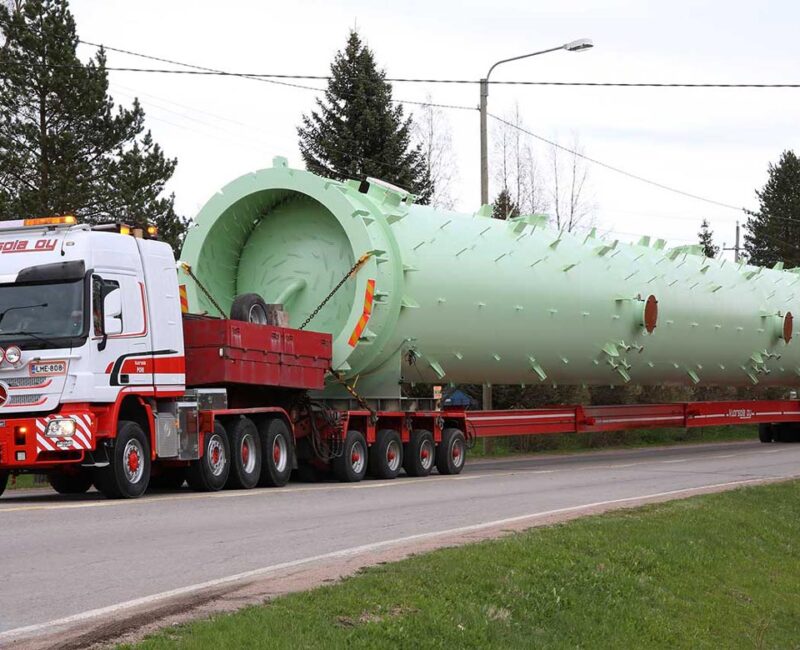
The industrial columns we supply include:

  • Stripping columns
  • Distillation columns

West Welding can design pressure equipment in accordance with EN or ASME standards. For pressure equipment delivered to the European Economic Area, we comply with the requirements of the Pressure Equipment Directive 2014/68/EU and provide CE marking when it is required by the applicable requirements for the delivery and the equipment.

Process Columns for Demanding Industrial Processes

A process column is typically a vertical device in which gas, vapor, and liquid streams are brought into contact under controlled conditions to achieve separation. Depending on the process, separation is based, for example, on the different volatilities of the components or on mass transfer between the liquid and gas phases.

The column shell, connections, supports, and internal component fastenings must be designed to accommodate the process pressure, temperature, media, loads, and the selected column technology. West Welding carries out the mechanical design and fabrication of the equipment based on specifications provided by the customer, process designer, or technology supplier. The scope of delivery and boundaries of responsibility are always defined on a project-by-project basis.

Distillation columns for separating components

In a distillation column, the components of a liquid mixture are separated from one another based on their different volatilities. The vapor rises upward in the column, and the liquid flows downward. Repeated vaporization, condensation, and mass transfer between phases concentrate the more volatile components at the top of the column and the less volatile components at the bottom.

The distillation process can be continuous or batch. The column can operate at elevated pressure, near atmospheric pressure, or under negative pressure, depending on the process and the substances being separated. In addition to operating conditions, the equipment’s design takes into account external loads, thermal expansion, potential cyclic loading, and the requirements for the column’s internal components and connections.

The distillation columns manufactured by West Welding are customized for demanding industrial applications, where emphasis is placed on safe construction, material traceability, controlled weld quality, and reliable project delivery.

What is the difference between a stripping column and a distillation column?

Stripping columnDistillation column
Main taskRemoval of volatile components from a liquidSeparation and concentration of components in a liquid mixture
Operating PrincipleVolatile components are transferred from the liquid phase to a gas or vapour streamThe separation is based on the different volatilities of the components and the countercurrent contact between the vapor and the liquid
Typical stripping or operating mediaSteam, air, inert gas, or process-generated vapour.Process-generated vapour and reflux liquid.
A typical goalImpurity removal, degassing, or substance recoverySeparation of product fractions to the desired purity
Key Areas of Mechanical DesignProcess medium, corrosion, pressure or vacuum, temperature, and internals support arrangementsPressure or vacuum, temperature, thermal expansion, external loads, and internals support arrangements

Stripping and distillation are different separation processes, even though both rely on mass transfer between the liquid and gas phases. Therefore, the column type, process design, and internal components are always selected based on the separation objective.

The manufacture of large columns requires production capacity and welding expertise

Large process columns require not only adequate production facilities but also strong expertise in materials, welding, quality assurance, and project logistics. West Welding manufactures its products at its own manufacturing facility in Teuva. Our current production capacity allows for equipment up to 65 metres in length, with maximum diameters exceeding 8.5 metres. Final manufacturing and transportation limits are always determined on a project-specific basis.

Available materials include carbon steels, stainless steels, nickel alloys, duplex stainless steels, titanium, and composite materials. Material selection is based on process conditions, operating temperature, corrosion resistance, strength requirements, and the applicable design code.

Welding quality is supported by certified management systems and approximately 280 qualified welding procedures. Manufacturing can include NDT and pressure testing in accordance with project requirements, as well as any required third-party inspections.

Why Choose West Welding as Your Column Manufacturer?

West Welding has been manufacturing demanding pressure and process equipment in Finland since 1983. Over the years, we have completed thousands of pressure vessel and steel structure projects, served more than 180 industrial and public-sector customers, and delivered products to more than 20 countries across five continents.

In column projects, customers benefit from a single supplier responsible for design, manufacturing, quality management, project management, and logistics. This reduces interfaces between different parties and simplifies the delivery of large, technically demanding equipment.

UKK

A process column is an industrial device in which substances are separated or processed using controlled flows of gas, steam, and liquid. Columns are used, for example, in distillation and stripping. The exact design of a column is determined by the process, operating conditions, and internal components.

A stripping column removes one or more volatile components from a liquid by means of gas or steam. A distillation column separates the components of a liquid mixture primarily based on differences in volatility. Both processes rely on mass transfer between liquid and gas phases, but their objectives and operating principles are different.

Yes. West Welding designs and manufactures large stripping and distillation columns based on specifications provided by the customer or the process technology supplier. The scope of supply is defined individually for each project.

West Welding works with a wide range of materials, including carbon steels, stainless steels, nickel alloys, duplex stainless steels, specialty steels, titanium, and composite materials. Final material selection is based on the process medium, operating temperature, corrosion conditions, strength requirements, and the applicable design code.

Yes, the scope of supply can include transportation and installation planning, heavy transport arrangements, lifting operations, installation supervision, and installation services to the agreed extent. The scope of supply and division of responsibilities are always defined individually for each project.

Useful initial information includes, at a minimum, the intended purpose of the column, process and design parameters, substances to be processed, material requirements, preliminary dimensions, details of internals and nozzles, the applicable design code, the destination country, delivery requirements, and the target schedule. If all information is not yet available, the project can be initiated by jointly defining the initial requirements and project responsibilities.