


Processes differ, but the fundamental questions in design remain the same: what happens inside the equipment, what loads it is exposed to, and how the requirements are addressed through materials, structural design and manufacturing. Design and manufacturing experience gained across different industries can also be applied to new processes and applications.
From Process Data to Design Basis
The mechanical design of process equipment does not begin with design pressure and temperature alone. The first step is to define the function of the equipment within the process and the operating conditions the structure must withstand.
In addition to normal operation, the design must account for conditions such as start-ups, shutdowns, cleaning cycles, variations in filling level and possible upset conditions. Together, these define the operating profile and the loads the equipment must withstand throughout its intended service life.
Internal pressure, temperature differences, loads transferred from piping, the equipment’s own weight and its contents can act simultaneously. The process medium, in turn, affects material suitability, corrosion allowance, joint design and possible surface protection. The governing load cases must be identified and used as the basis for determining the required materials, structural design and dimensions.
The structural solution must meet strength requirements while also being feasible to manufacture. Engineering calculations, structural design and manufacturability therefore cannot be treated as separate stages.
Material and wall thickness affect forming, welding, heat treatment and inspection methods. Geometry and the location of joints determine whether welds are accessible, whether the required inspections can be performed and how manufacturing-induced distortions can be controlled.
Manufacturability is therefore not something that is checked after the design is complete. It forms part of the design basis from the beginning.
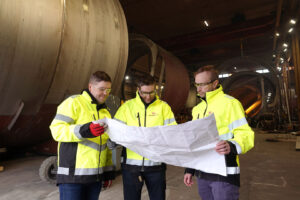
Process and Operating Conditions Define the Design Priorities
Pressure, temperature, flow, corrosion, thermal expansion and mechanical loads occur across many industries. Their relative importance, however, varies depending on the process and operating environment.
Experience gained across different industries makes it possible to start the design process based on the initial information provided by the customer, such as process parameters and required volume. Experience from different applications helps turn these initial requirements into a practical equipment design.
Chemical Industry: Hazardous Substances Affect Material and Structural Choices
In the chemical industry, high pressure and temperature can be combined with corrosive media or otherwise demanding process conditions. Hazardous substances and aggressive processes place specific requirements on both materials and structural design.
Material suitability cannot therefore be assessed simply on the basis of the chemical involved. Concentration, temperature range, impurities, flow velocity and process variations can significantly affect corrosion behaviour. Structural details also influence local conditions. Stagnant areas, deposits, poor drainability or unfavourable flow conditions can increase local stresses or corrosion in areas that are not fully represented by general process parameters.
Reactors, autoclaves, columns, heat exchangers and scrubbers can be manufactured from materials including carbon and stainless steels, duplex steels, titanium and other alloys. In addition to corrosion resistance, materials must provide sufficient strength, weldability and manufacturability. Surfaces exposed to chemical attack can also be protected by weld overlay where required.
Pulp, Paper and Bioproduct Industry: Aggressive Process Conditions Emphasise Material Selection
Process conditions in the pulp, paper and bioproduct industries can be aggressive. Chemical exposure and corrosion affect material selection, equipment service life and the possibilities for repairing equipment or extending its operating life.
The equipment being designed is also often part of an operating plant. In addition to new equipment, projects may involve repairs, modifications or changes in the intended use of existing equipment. New process parameters must then be integrated with the existing structure, materials, documentation and available installation space.
Repair and modification projects may involve equipment where the original material selection no longer provides the best solution for the current process conditions. Material costs may have influenced earlier choices, while actual operation reveals the effects of corrosion, chemical exposure and other process conditions.
In demanding process conditions, the original shell of the equipment can be protected with an internal lining. The selection of the lining material must take into account not only the process conditions but also its compatibility with the original structure and the manufacturing methods used.
In repair and modification projects, as much of the structure as possible can be prefabricated in the workshop. In some cases, access routes or limited installation space require the equipment to be divided into sections. This affects joint locations, site welding, inspections, lifting arrangements and tolerances already during the design stage.
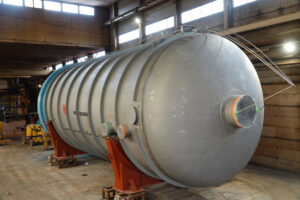
Marine Industry: Pressure Resistance Combined with a Dynamic Operating Environment
In marine applications, pressure equipment operates in a moving environment. Accelerations caused by vessel movements affect tanks, their contents, supports and connections. Load cases can also vary depending on the filling level, while repeated loading makes fatigue resistance an important consideration. At the same time, available space and allowable weight can impose significant constraints on the structure.
Equipment designed for marine use must also comply with the applicable classification society requirements. Classification affects not only design but also material approval, manufacturing, welding, inspections, testing and documentation. These requirements therefore form part of the design and manufacturing process throughout the project.
In LNG tanks, the requirements of the marine environment are combined with cryogenic operating conditions. The approximately –163 °C operating temperature of LNG places specific requirements on material toughness, welding solutions, insulation and quality assurance. Tank design considers pressure resistance, dynamic and repeated loads, supporting structures, temperature effects, manufacturability and installation as an integrated whole.
Processes Supporting the Green Transition: Evolving Applications and Larger Scale
In projects supporting the green transition, process technology and equipment design data may continue to develop during the project. In projects involving hydrogen, ammonia, biomethanol, carbon capture, utilisation and storage (CCUS), and new biorefining processes, piloting, scale-up and the requirements of industrial implementation may progress partly in parallel.
This places greater emphasis on managing design data, assessing the impact of changes and maintaining a clear interface between process engineering, equipment design and manufacturing.
New applications can also introduce specific considerations related to material behaviour. In hydrogen applications, one such phenomenon is hydrogen embrittlement, which must be considered when assessing material suitability and operating conditions. Previous experience with demanding materials and pressure equipment provides a foundation for the design, but the suitability of materials and structures must always be assessed for the specific hydrogen environment.
In CCUS projects, large processing and storage volumes can also introduce questions related to manufacturing and transportation capacity. Equipment size affects, for example, the dimensions in which it can be manufactured and how it can be transported to the installation site. Manufacturing, transportation and installation constraints can therefore influence the structural design from an early stage.
Cross-Industry Experience Lowers the Threshold for New Applications
Experience gained across different industries can also be applied to the design of new processes and applications.
“We have designed pressure equipment for a wide range of industrial projects, giving us extensive experience across different applications. This gives us a lower threshold for offering solutions for unique applications as well. We see challenges as opportunities.”
Janne Halonen, Managing Director
Equipment can also be designed from the outset for more than one purpose. In such cases, the requirements of different process conditions and media must be considered in material selection, dimensioning and structural design.


